A Woman Is Being Harassed On Twitter For Her Thread On 9/11 And Black History

After Elexus Jionde’s 9/11 tweet went viral, a potential Twitter bug disabled threading on the tweetstorm it was meant to introduce, removing crucial context and exposing her to further abuse.

On Sunday evening, the 15th anniversary of the September 11th attacks, Elexus Jionde, a 22-year-old history graduate from Charlotte, North Carolina, tweeted:

On Sunday evening, the 15th anniversary of the September 11th attacks, Elexus Jionde, a 22-year-old history graduate from Charlotte, North Carolina, tweeted:

When the tweet went viral (50,000 retweets in less than 24 hours), Jionde decided to add to it, detailing key parts of black history in the US. Her goal was to highlight periods of racism and injustice that she believed should be remembered in the same way as 9/11. To give the tweetstorm continuity — and to make her tweets easily discoverable — Jionde threaded them together by replying to each tweet as she published it. (You&;ll find the full thread — which is made up of 49 tweets detailing many other examples of racial inequality in US history, and asking for them to “not be forgotten” — here).

Here are some sample tweets from Jionde’s tweetstorm:

Here are some sample tweets from Jionde's tweetstorm:


View Entire List ›

Quelle: <a href="A Woman Is Being Harassed On Twitter For Her Thread On 9/11 And Black History“>BuzzFeed

Announcing the General Availability of Storage Service Encryption for Data at Rest

Storage Service Encryption for Azure Blob Storage helps you address organizational security and compliance requirements by encrypting your Blob storage (Block Blobs, Page Blobs and Append Blobs).

Today, we are excited to announce the General Availability of Storage Service Encryption for Azure Blob Storage. You can enable this feature on any Azure Resource Manager storage account using the Azure Portal, Azure Powershell, Azure CLI or the Microsoft Azure Storage Resource Provider API.

Microsoft Azure Storage handles all the encryption, decryption and key management in a totally transparent fashion. All data is encrypted using 256-bit AES encryption, also known as AES-256, one of the strongest block ciphers available. Customers can enable this feature on all available redundancy types of Azure Storage – LRS, GRS, ZRS, RA-GRS and Premium-LRS for all Azure Resource Manager Storage accounts and Blob Storage accounts. There is no additional charge for enabling this feature. 

Note that SSE encrypts when blobs are written or updated. This means that when you enable SSE for an existing storage account, only new writes are encrypted; it does not go back and encrypt the data already present.

Find out more about Storage Service Encryption with Service Managed Keys.
Quelle: Azure

Recent RDO blogs, September 12, 2016

Here’s what RDO enthusiasts have been blogging about in the last few weeks.

LinuxCon talk slides: “A Practical Look at QEMU’s Block Layer Primitives” by Kashyap Chamarthy

Last week I spent time at LinuxCon (and the co-located KVM Forum) Toronto. I presented a talk on QEMU’s block layer primitives. Specifically, the QMP primitives block-commit, drive-mirror, drive-backup, and QEMU’s built-in NBD (Network Block Device) server.

… read more at http://tm3.org/9x

Complex data transformations with nested Heat intrinsic functions by Steve Hardy

Disclaimer, what follows is either pretty neat, or pure-evil depending your your viewpoint ;) But it’s based on a real use-case and it works, so I’m posting this to document the approach, why it’s needed, and hopefully stimulate some discussion around optimizations leading to a improved/simplified implementation in the future.

… read more at http://tm3.org/9y

Red Hat OpenStack Platform 9 is here! So what’s new? by Marcos Garcia

This week we released the latest version of our OpenStack product, Red Hat OpenStack Platform 9. This release contains more than 500 downstream enhancements, bug fixes, documentation changes, and security updates. It’s based on the upstream OpenStack Mitaka release. We have worked hard to reduce the time to release new versions and have successfully done so with this release! Red Hat OpenStack Platform 9 contains new Mitaka features and functionality, as well as the additional hardening, stability, and certifications Red Hat is known for. Of course, there continues to be tight integration with other key portfolio products, as well as comprehensive documentation.

… read more at http://tm3.org/9z

Deploying Server on Ironic Node Baseline by Adam Young

My team is working on the ability to automatically enroll servers launched from Nova in FreeIPA. Debugging the process has proven challenging; when things fail, the node does not come up, and there is little error reporting. This article posts a baseline of what things look like prior to any changes, so we can better see what we are breaking.

… read more at http://tm3.org/9-

A retrospective of the OpenStack Telemetry project Newton cycle by Julien Danjou

A few weeks ago, I recorded an interview with Krishnan Raghuram about what was discussed for this development cycle for OpenStack Telemetry at the Austin summit.

… read more at http://tm3.org/a0

Deploying Fernet on the Overcloud by Adam Young

Here is a proof of concept of deploying an OpenStack Tripleo Overcloud using the Fernet token Provider.

… read more at http://tm3.org/a1

OpenStack Infra: Understanding Zuul by Arie Bregman

Recently I had the time to explore Zuul. I decided to gather everything I learned here in this post. Perhaps you’ll find it useful for your understanding of Zuul.

… read more at http://tm3.org/a2

OpenStack Infra: How to deploy Zuul by Arie Bregman

This is the second post on Zuul, which focuses on deploying it and its services. To learn what is Zuul and how it works, I recommend to read the previous post.

… read more at http://tm3.org/a3

Scaling-up TripleO CI coverage with scenarios by Emilien Macchi

When the project OpenStack started, it was “just” a set of services with the goal to spawn a VM. I remember you run everything on your laptop and test things really quickly.
The project has now grown, and thousands of features have been implemented, more backends / drivers are supported and new projects joined the party.
It makes testing very challenging because everything can’t be tested in CI environment.

… read more at http://tm3.org/a4

Introducing patches to RDO CloudSIG packages by Jakub Ruzicka

RDO infrastructure and tooling has been changing/improving with each OpenStack release and we now have our own packaging workflow powered by RPM factory at review.rdoproject.org, designed to keep up with supersonic speed of upstream development.

… read more at http://tm3.org/a5

From decimal to timestamp with MySQL by Julien Danjou

When working with timestamps, one question that often arises is the precision of those timestamps. Most software is good enough with a precision up to the second, and that’s easy. But in some cases, like working on metering, a finer precision is required.

… read more at http://tm3.org/a6

Generating Token Request JSON from Environment Variables by Adam Young

When working with New APIS we need to test them with curl prior to writing the python client. I’ve often had to hand create the JSON used for the token request, as I wrote about way back here. Here is a simple bash script to convert the V3 environment variables into the JSON for a token request.

… read more at http://tm3.org/a7

Actionable CI by Assaf Muller

I’ve observed a persistent theme across valuable and successful CI systems, and that is actionable results.
A CI system for a project as complicated as OpenStack requires a staggering amount of energy to maintain and improve. Often times the responsible parties are focused on keeping it green and are buried under a mountain of continuous failures, legit or otherwise. So much so that they don’t have time to focus on the following questions:

… read more at http://tm3.org/a8

Thoughts on Red Hat OpenStack Platform and certification of Tesora Database as a Service Platform by Ken Rugg, Chief Executive Officer, Tesora

When I think about open source software, Red Hat is first name that comes to mind. At Tesora, we’ve been working to make our Database as a Service Platform available to Red Hat OpenStack Platform users, and now it is a Red Hat certified solution. Officially collaborating with Red Hat in the context of OpenStack, one of the fastest growing open source projects ever, is a tremendous opportunity.

… read more at http://tm3.org/a9
Quelle: RDO

StorSimple Virtual Array: Critical update, software version 10.0.10288.0 (Update 0.3) now available

A new critical update for StorSimple Virtual Array, version 10.0.10288.0 (Update 0.3) is now available for download.

Release notes and issues addressed in this release: StorSimple Virtual Array Update 0.3 release notes.
Update install guide: Install Updates on your StorSimple Virtual Array.

Update 0.3 contains the following bug fixes and improvements .

Backups: Backups would fail to complete under certain conditions. The root cause of this issue is fixed in this release. The fix does not apply retroactively to shares that are already seeing this issue. Customers who are seeing this issue should first apply Update 0.3, then contact Microsoft Support to perform a full system backup to fix the issue
iSCSI: An issue observed in earlier releases where iSCSI session was disconnected when copying large amount of data to a volume on the StorSimple Virtual Array.  This issue is fixed in this release
New virtual disk images: New VHD, VHDX and VMDK are now available via the Azure classic portal. You can download these images to provision new Update 0.3 devices

We strongly recommend that you apply this update. The update is a disruptive update (requires reboot of the SVA) and should be applied during a planned downtime. Should you encounter any issues, please contact Microsoft Support.
Quelle: Azure

Samsung Lost An Entire HP In Market Value After Note 7 Disaster

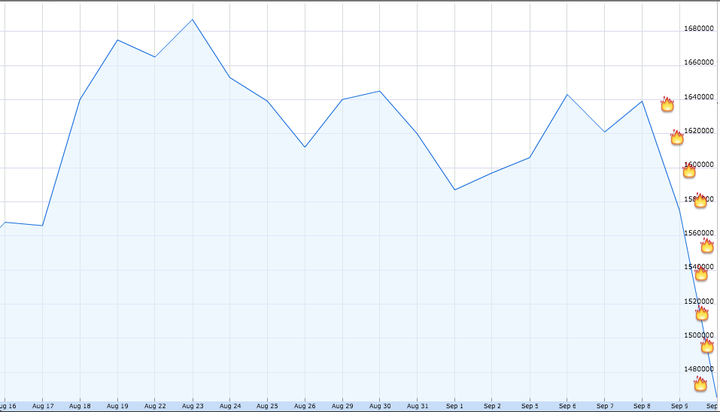
Samsung Lost An Entire HP In Market Value After Note 7 Disaster

Google Finance / Via google.com

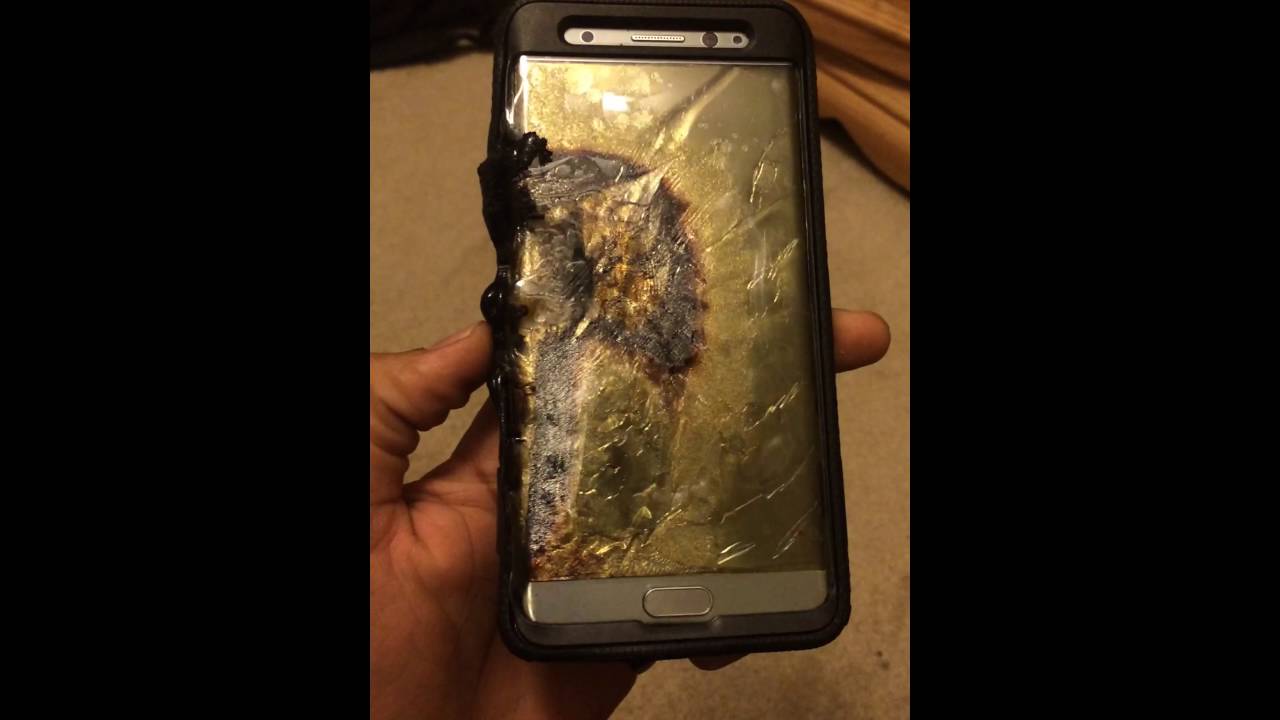
Samsung&;s disastrously defective new Galaxy Note 7 has wiped about $25 billion off its market value, with its stock falling almost 11% in trading on Friday and Monday. It&039;s the worst two-day fall for the Korean electronics giant since 2008, according to Bloomberg data.

The blown launch of the Note 7, Samsung&039;s would-be iPhone competitor, will cost an estimated $1 billion in recall costs alone. But the true costs to the company could be much higher if its flagship brand struggles to recover from brutal headlines in the US — including a New York Post report Sunday that a 6-year old was taken to hospital with burns after a Note 7 exploded in his hands.

One industry analyst, John Donovan at BlueFin, even raised his estimate of how many iPhone 7s Apple would sell given the collapse of an important competitor. He said the “TMZ-like reporting environment” around the Note 7 and its defects has left Apple “primed to swoop in and take full advantage.”

Several airlines have told customers to not fly with their Note 7s charged or even on during the flight, while Delta said the devices could only be taken as carry-on luggage, and must be switched off during the flight.

Samsung stock fell 7% on Monday, meaning the company&039;s market value has fallen by more than the entire valuation of HP.

youtube.com

While the problems with the phone&039;s battery occasionally overheating and combusting have been known since early September when the company announced a voluntary exchange program, the bad news climaxed late last week when Samsung instructed customers to “power down their Galaxy Note7s and exchange them now.”

The Consumer Product Safety Commission said on Friday that consumers should turn off their Note 7s and not charge them. The phone was released in August.

Quelle: <a href="Samsung Lost An Entire HP In Market Value After Note 7 Disaster“>BuzzFeed