Microsoft OMS + System Center product meetup at Ignite 2016

Would you like to participate in a discussion on IT Management? This is an opportunity for you to meet the Microsoft leadership team and influence the direction of the management products (OMS and System Center) at Microsoft. We will have dedicated tables to discuss various topics with members of the product team and you will get a chance to speak directly with the Microsoft Directors. This is a FREE event for Ignite attendees and dinner will be provided. You can participate by filling out this short survey and if selected and depending on capacity we will send you a meeting invite with details on the time and location of the meetup at Ignite.


Link to survey : https://www.surveymonkey.com/r/OMSIgniteMeetup


We are looking forward to meeting you!
Quelle: Azure

StorSimple Virtual Array – File Server or iSCSI Server?

StorSimple Virtual Array (SVA) can be configured as a File Server or as an iSCSI Server. Configured as a File Server, StorSimple Virtual Array provides the native shares which can be accessed by users to store their data. StorSimple Virtual Array configured as an iSCSI server provides volumes (LUNs), which can be mounted on an iSCSI initiator (typically a Windows Server). This blog post looks at the various requirements that should be considered when choosing a configuration of the StorSimple Virtual Array for a remote or branch office.

Architecture


Requirement

StorSimple Virtual Array File Server

StorSimple Virtual Array iSCSI Server

Number of Shares

SVA file server supports a maximum of 16 shares

If the number of shares in the remote or branch office is larger than 16, we recommend using SVA iSCSI server

User self-restore

SVA file server allows the users to restore their data from previous five backups from .backups folder available in the share

An administrator must restore the cloud snapshot as a new volume and then restore data from the restored volume

Number of files in a share

SVA file server supports up to a maximum of 1 million files per share (maximum of 4 million files in total on the file server)

SVA iSCSI server works on the block level and does not have a limitation in terms of number of files

Maximum size of data

SVA file server supports a maximum share size of 2 TB for locally pinned shares and a maximum of 20 TB for tiered shares

SVA iSCSI server supports a maximum volume size of 500 GB for locally pinned shares and a maximum of 5 TB for tiered volumes

Failover time

SVA file server failover time is dependent on number of files in a share. During the failover, the directory structure is recreated and this may take additional time depending on the number of files in the share. To estimate the failover time, you can approximate the time as 20 minutes per 100,000 files. Hot data is downloaded in the background based on heat map

SVA iSCSI server provides instant failover (minutes to make the volume available). Only the metadata is downloaded during the failover and volume made available for use after the failover. Hot data is downloaded in the background based on the heat map

Active directory domains

SVA file server must be joined to an AD domain

SVA iSCSI server can be optionally joined to an AD domain, but it is not required. The iSCSI initiator may be joined to the domain or can be a part of the work group in non-active directory domain environments

File Server Resource Manager (FSRM) features (Quota, File blocking etc.)

SVA file Server does not support FSRM features

FSRM features can be enabled on the Windows server iSCSI initiator connected to a SVA iSCSI server


Useful Links:

StorSimple Virtual Array Overview

StorSimple Virtual Array Deployment Videos

StorSimple Virtual Array Best practices
Quelle: Azure

Introducing the Docker Authorized Partner Program

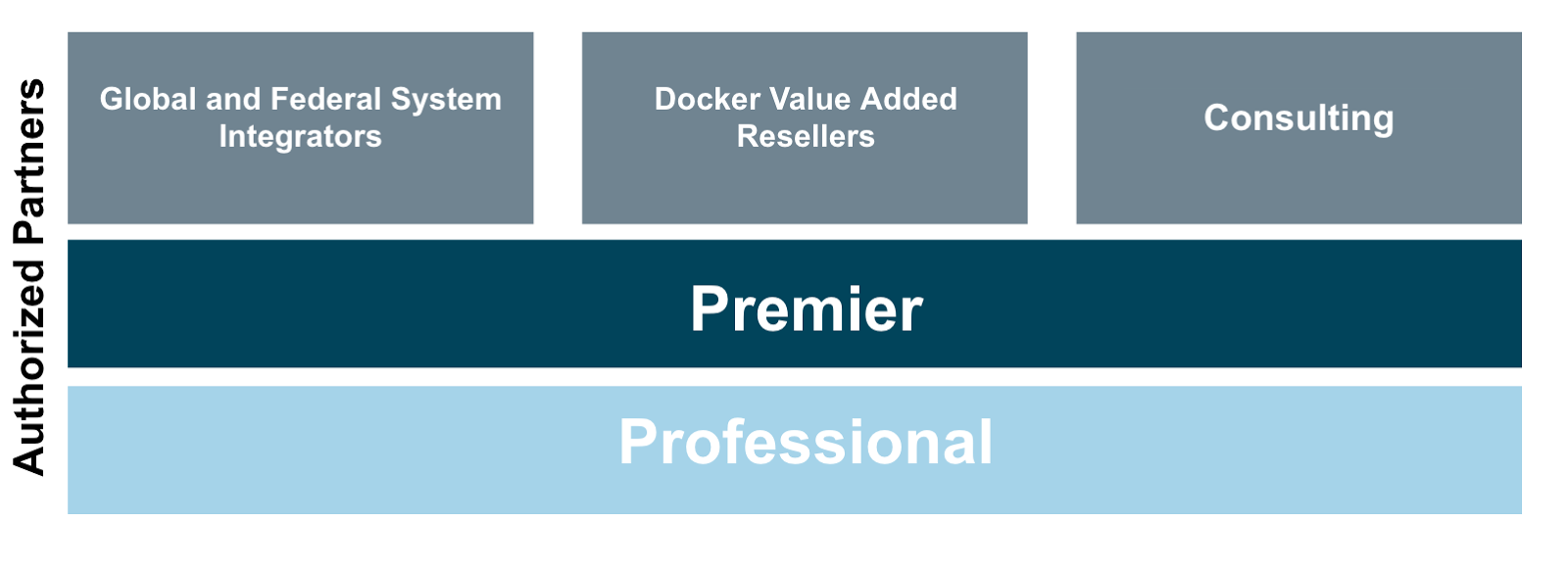
Today the Docker team is excited to announce a new tiered Docker Partner Program to address the growing demand by companies to adopt Containers as a Service environments with Docker Datacenter.  This enhanced program provides end-to end support for a community of Resellers, Regional Consulting partners, Global Systems Integrators and Federal Systems Integrators.
Since the launch of Docker over three years ago, there has been tremendous adoption from the developer community of Docker container technology to accelerate their development and CI workflows. Companies of all sizes, from startups to Fortune 500 in healthcare, financial services, mobile apps and more are leaning on Docker to transform their application pipeline by containerizing legacy and new microservices applications.  As companies embark on their Docker journey, they are looking to their business partners to assist them in developing a business case, understand the functionality, architect use cases and deploy the environments.
New Program, Training and Resources
Containerization is the next catalyst for transformation in application infrastructure. The Docker Partner Program is designed to help partners build a successful “Docker practice” rooted in best practices, technical expertise and as extension of their expertise in cloud technologies, Software Defined Datacenter and converged infrastructure.
The new tiered partner program gives Partners a clear path from onboarding to establishing expertise by growing from Professional to Premier tiers. As partners invest in their Docker practice with more accredited professionals, Docker in turn increases the program benefits to help accelerate the partner business.
A critical element to this program is the professional accreditations available for the Sales, Presales, Technical and Consulting professionals. New self-paced and instructor led courses have been designed for a comprehensive curriculum to ensure partner professionals can guide IT organizations successfully on their Docker journey.  For consulting professionals, the addition in instructor led courses with hands on exercises ensures deep technical expertise in design, deployments and administration. In addition to training, the revamped Docker Partner Portal features a resource center for content, collateral and tools to help build awareness, demand and accelerate successful customer engagements.
Removing Friction with Distribution
Docker is also partnering with commercial distributor SYNNEX and our Federal distribution partners Immix, SYNNEX and Vizuri in North America to streamline the sales process and customer value period. Partner companies can work with distribution for access to Docker subscription packages while getting the technical and business development support needed to develop their practice.  Our Federal distributors that p specialize in government solutions bring Docker’s enterprise offerings to government agencies, state, municipalities and educational institutions.
From global, federal to regional system integrators to value added resellers, consulting providers and distribution partners, the Docker Partner Program is focused on developing a thriving community that can successfully guide companies from deploying their first container to rolling out a more sophisticated enterprise Containers as a Service platform using Docker Datacenter. 
Get Started Today

Sign up for the Partner Program
Log in to the Partner Portal and check out all the resources
Get trained: Start your learning path and earning your accreditation
Become Authorized!

We look forward to partnering with you and accelerating your Docker journey!
More Resources

Read the press release
Read the white paper:  Modern App Architecture for the Enterprise
Learn more about Docker Datacenter

The post Introducing the Docker Authorized Partner Program appeared first on Docker Blog.
Quelle: https://blog.docker.com/feed/

The Underground Neo-Nazi Promo Campaign Behind Adult Swim’s Alt-Right Comedy Show

The Underground Neo-Nazi Promo Campaign Behind Adult Swim’s Alt-Right Comedy Show

Last month, printers at the University of California, Santa Cruz and elsewhere spontaneously disgorged a single sheet of paper bearing swastikas and rows of black and white text. Titled Samiz.dat, the printouts told the story of a man named Tyler, who in a near-future New York commits a mass murder in a synagogue. Fueled by a “pure hatred of niggers,” Tyler begins by killing “a single black in the temple” — whose presence is the result of a “kike slut” who believes in “race mixing propaganda” — then begins to shoot the rest of the “filthy Jew[s].”

At the end of the story, Tyler turns to…

“…a teenaged Jewess that was quivering in fear. Tyler grabbed a nearby tefillin and began furiously beating her with the straps. After rejoicing in her cries of pain, he used the hot flash hider of his Saiga to penetrate her virgin cunt and sear her insides before he began to rape her. Tyler&;s last moments were spent raping all three orifices of the virgin Jewess before killing her and himself. “I love Jews&; Jews rock&033;” were Tyler&039;s last words. This atrocity happened as a result of MILLION DOLLAR EXTREME PRESENTS WORLD PEACE, Friday nights on Cartoon Network&039;s Adult Swim.”

Evidence strongly suggests the disturbing text is the work of Andrew “weev” Auernheimer, the notorious white nationalist hacker and troll who throughout the past year has made a sport of sending unwanted hate speech to thousands of unprotected public printers around the country. In March, he took immediate credit for printing, mostly using open printers at universities and colleges, some 30,000 flyers for the Daily Stormer, which describes itself as “The World&039;s Alt-Right and Pro-Genocide Website.” Between two large swastikas, the flyer exhorts white men to “join us in the struggle for global white supremacy.” Then, earlier in August, Weev sent to thousands more printers the first issue of a “webzine” called Samiz.dat — for the underground protest literature in the Soviet Union — that advocated raping, torturing, and murdering the children of black people, Jews, and “federal agents.” On Twitter, Weev described Samiz.dat as “an underground … magazine for racially aware authoritarians published only to every open printer on the Internet.” The hack has inspired imitators.

Indeed, these printouts have become so commonplace that they no longer spur coverage. What is surprising about the newest issue of Samiz.dat, however, is that it explicitly promotes a weekly television show on a major cable network owned by Time Warner. Corporate media tends not to be an object of affection amongst white supremacists. (“I know you fucking Jews control the fucking media,” reads a line from the document.)

But then, World Peace is far from a typical television show. As BuzzFeed News reported last month, the members of Million Dollar Extreme (MDE), the sketch comedy troupe who created the show, are the preferred court jesters of the alt-right, the pro-Trump online movement that prizes offensive speech, believes white people in America are imperiled, and churns out memes at a metastatic pace. The alt-right is a leaderless movement that resists easy characterization; in fact, that is one of its defense mechanisms. Weev described even a sympathetic report by Breitbart on the alt-right as “The tireless attempts of you Jews to smear us decent Nazis.” But his preoccupation with white identity and white nationhood, his adoption of hate speech as a principle, and his commitment to trolling make him an important figure within the movement regardless of his public statements.

Indeed, while Samiz.dat may have read simply as terrifying speculative fiction to the passersby who discovered it, the document is full of in-jokes that would only make sense to committed members of the alt-right.

Tyler, the mass murderer, is a reference to a character created by MDE frontman Sam Hyde. In the story printouts, Tyler commands his victims to post to social media blaming Hyde for the shooting; that’s a reference to a series of hoaxes in which members of 4chan publicly named Hyde as the perpetrator of a series of real mass shootings. And Tyler&039;s last words, “Jews rock&033;”, are the name of a skit in a recent episode of World Peace.

So what apparently caused Weev to devote an entire issue of his “webzine” to promoting World Peace?

Though Adult Swim has a history of controversial guerrilla marketing, the network said in a statement that it had no part in the creation or dissemination of the promotion.

Instead, Weev seems to have been prompted by a request from Sam Hyde. On Aug. 16, Hyde&039;s Twitter account (which he previously told BuzzFeed News was managed by his “assistant”) asked his followers to help promote World Peace:

Within four hours, Weev wrote to another alt-right account that he had “already finished the postscript” — a printer language — “and i&039;m waiting for the scan to finish.” Then he posted a copy of the text of Samiz.dat to Pastebin.com. The UC Santa Cruz Police Department reported flyers had been sent to networked campus printers the following day.

Hyde is personally acquainted with Weev. The two accounts periodically interact on Twitter; Hyde (or his assistant) told Weev that he was “planning on sending” him a review copy of the MDE book How to Bomb the US Gov&039;t. On the Million Dollar Extreme subreddit — which Hyde, or his “assistant,” moderates — Weev bragged about the first issue of Samiz.dat, which mentioned Hyde by name. And in a Reddit AMA, Weev said that he had met Hyde only once, but that Hyde was “an awesome dude” who had offered to help him make videos. Weev added that when they met he asked for “a fanboy jpeg,” which may be the following image of the two heiling that periodically gets shared on the MDE internet:

Via reddit.com

Hyde responded to a BuzzFeed inquiry asking if he knew about the promotion ahead of time with a one word email: “nope.” Hyde later followed up with an expression of affectionate condescension for the reporter.

Despite repeatedly taking credit for Samiz.dat online and initially agreeing over Twitter DM to answer questions about the fliers, Weev attributed the publications to his “assistant.” He told BuzzFeed News that Hyde did not know about the publication ahead of time. When asked how he knew that, since his assistant was responsible for the publication, he responded, “Why would my assistant consult those disgusting race mixers from MDE about our plan to get the liberal media to attack them?”

But perhaps a more important question than the provenance of the letter is one about what it represents: Does a show that inspires neo-Nazi pamphleteering jibe with Time Warner&039;s avowed corporate values of “freedom of expression, diversity of viewpoints and responsible content?”

Time Warner did not respond to a request for comment.

Quelle: <a href="The Underground Neo-Nazi Promo Campaign Behind Adult Swim’s Alt-Right Comedy Show“>BuzzFeed

Today Is The Day You Can Finally Delete The Stocks App

Download iOS 10 right now.

Have you ever used the Stocks app? Or Keynote? Or the Apple Watch app?

Have you ever used the Stocks app? Or Keynote? Or the Apple Watch app?

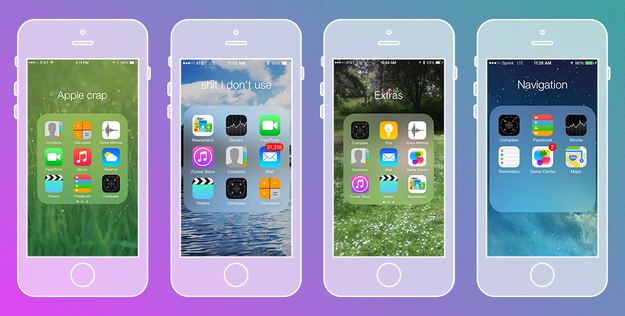
Probably not, right? But for years you haven&;t been able to delete built-in Apple apps from iOS.

Michelle Rial / BuzzFeed

Well, starting today, you can finally DELETE ‘EM.

Well, starting today, you can finally DELETE 'EM.

giphy.com / Via logotv.com

Connect your iPhone to a computer to back it up via iTunes. You can also back up your phone using iCloud by going to Settings > iCloud > Backup > turn it to on. If you don&039;t have enough iCloud space, try this trick.

Don&039;t skip this step&; You could lose all of your data&033;

Next, update to iOS 10 in Settings.

Next, update to iOS 10 in Settings.

The fastest way to download iOS 10 is to connect the device to your computer. If you have the latest version of iTunes, open the app and then go to Summary. Next, click Check for Update.

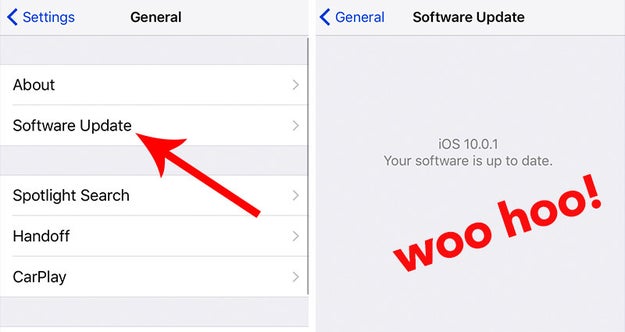
You can also update the device wirelessly. Open the Settings app > General > Software Update and tap Download and Install.

These devices can upgrade to iOS 10: iPhone 5 or newer, a 6th generation iPod Touch, iPad Pro, iPad 4 or newer, and iPad mini 2 or newer.


View Entire List ›

Quelle: <a href="Today Is The Day You Can Finally Delete The Stocks App“>BuzzFeed

Red Hat Confirms Over 40+ Accepted Sessions at OpenStack Summit Barcelona

This Fall&;s 2016 OpenStack Summit in Barcelona, Spain will be an exciting event. After a challenging issue with the voting system this time around (somehow prevented direct URLs to each session), the Foundation has posted the final session agenda, detailing the entire week&8217;s schedule of sessions and events. Once again, I am excited to see that based on community voting, Red Hat will be sharing over 40 sessions of technology overview and deep dives around OpenStack services for containers, storage, networking, compute, network functions virtualization (NFV), and much more. 
Red Hat is a Premiere sponsor in Barcelona this Fall and we are looking forward to sharing all of our general sessions, workshops, and full-day breakout track. To learn more about Red Hat&8217;s accepted sessions, have a look at the details below. Be sure to visit us at each session you can make, come by our booth in the Marketplace, which starts on Monday evening during the booth crawl, 6-7:30pm, or be sure to contact your Red Hat sales representative to meet with any of our executives, engineering, or product leaders face-to-face while in Barcelona. Either way, we look forward to seeing you all again in Spain in October! 
For more details on each session, click on the title below:

Tuesday October 25th
General sessions

Deploying and Operating a Production Application Cloud with OpenStack
 Chris Wright, Pere Monclus (PLUMgrid), Sandra O&8217;Boyle (Heavy Reading), Marcel Haerry (Swisscom)
11:25am-12:05pm

Delivering Composable NFV Services for Business, Residential & Mobile Edge
 Azhar Sayeed, Sharad Ashlawat (PLUMgrid)
12:15pm-12:55pm

I found a security bug, what happen&8217;s next?
 Tristan de Cacqueray and Matthew Booth
2:15pm-2:55pm

Failed OpenStack Update?! Now What?
 Roger lopez
2:15pm-2:55pm

OpenStack Scale and Performance Testing with Browbeat
Will Foster, Sai Sindhur Malleni, Alex Krzos
2:15pm-2:55pm

OpenStack and the Orchestration Options for Telecom / NFV
Chris Wright, Tobias Ford (AT&T), Hui Deng (China Mobile), Diego Lopez Garcia (Telefonica)
3:05pm-3:45pm

How to Work Upstream with OpenStack
Julien Danjou, Ashiq Khan (NTT), Ryota Mibu (NEC)
3:05pm-3:45pm

Live From Oslo
Kenneth Giusti, Joshua Harlow (Go Daddy), Oleksii Zamiatin (Mirantis), ChangBo Guo (EasyStack), Alexis Lee (HPE)
3:05pm-3:45pm

OpenStack and Ansible: Automation born in the Cloud
Keith Tenzer
3:05pm-3:45pm

Message Routing: a next-generation alternative to RabbitMQ
Kenneth Giusti, Andrew Smith
3:05pm-3:45pm

Pushing your QA upstream
Rodrigo Duarte Sousa
3:55pm-4:35pm

TryStack: The Free OpenStack Community Sandbox
Will Foster, Kambiz Aghaiepour
3:55pm-4:35pm

Kerberos and Health Checks and Bare Metal, Oh My! Updates to OpenStack Sahara in Newton
Elise Gafford, Nikita Konovalov (Mirantis), Vitaly Gridnev (Mirantis)
5:05pm-5:45pm

Wednesday October 26th

Feeling a bit deprecated? We are too. Let&8217;s work together to embrace the OpenStack Unified CLI.
 Darin Sorrentino, Chris Janiszewski
11:25am-12:55pm

The race conditions of Neutron L3 HA&8217;s scheduler under scale performance
John Schwarz, Ann Taraday (Mirantis), Kevin Benton (MIrantis)
11:25am-12:55pm

Barbican Workshop &; Securing the Cloud
Ade Lee, Douglas Mendizabel (Rackspace), Elvin Tubillara (IBM), Kaitlin Farr (John Hopkins University), Fernando Diaz (IBM)
11:25am-12:55pm

Cinder Always On &8211; Reliability And Scalability Guide
Gorka Eguileor, Michal Dulko (Intel)
12:15pm-12:55pm

OpenStack is an Application! Deploy and Manage Your Stack with Kolla-Kubernetes
Ryan Hallisey, Ken Wronkiewicz (Cisco), Michal Jastrzebski (Intel)
2:15pm-2:55pm

OpenStack Requirements : What we are doing, what to expect and whats next?
 Swapnil Kulkarni and Davanum Srinivas
3:55pm-4:35pm

Stewardship: bringing more leadership and vision to OpenStack
 Monty Taylor, Amrith Kumar (Tesora), Colette Alexander (Intel), Thierry Carrez (OpenStack Foundation)
3:55pm-4:35pm

Using OpenStack Swift to empower Turkcell&8217;s public cloud services
 Christian Schwede, Orhan Biyiklioglu (Turkcell) & Doruk Aksoy (Turkcell)
5:05pm-5:45pm

Lessons Learned from a Large-Scale Telco OSP+SDN Deployment
Guil Barros, Cyril Lopez, Vicken Krissian
5:05pm-5:45pm

KVM and QEMU Internals: Understanding the IO Subsystem
Kyle Bader
5:05pm-5:45pm

Effective Code Review
Dougal Matthews
5:55pm-6:35pm

Thursday October 27th

 Anatomy Of OpenStack Through The Eagle Eyes Of Troubleshooters
 Sadique Puthen
9:00am-9:40am

 The Ceph Power Show :: Hands-on Lab to learn Ceph &;The most popular Cinder backend&;
Brent Compton, Karan Singh
9:00am-9:40am

 Building self-healing applications with Aodh, Zaqar and Mistral
Zane Bitter, Lingxian Kong (Catalyst IT), Fei Long Wang (Catalyst IT)
9:00am-9:40am

 Writing A New Puppet OpenStack Module Like A Rockstar
Emilien Macchi
9:50am-10:30am

 Ambassador Community Report
Erwan Gallen, Kavit Munshi (Aptira), Jaesuk Ahn (SKT), Marton Kiss (Aptira), Akihiro Hasegawa (Bit-isle Equinix, Inc)
9:50am-10:30am

 VPP: the ultimate NFV vSwitch (and more!)?
Franck Baudin, Uri Elzur (Intel)
9:50am-10:30am

 Zuul v3: OpenStack and Ansible Native CI/CD
James Blair
11:00am-11:40am

 Container Defense in Depth
Thomas Cameron, Scott McCarty
11:50am-12:30pm

 Analyzing Performance in the Cloud : solving an elastic problem with a scientific approach
Alex Krzos, Nicholas Wakou (Dell)
11:50am-12:30pm

 One-stop-shop for OpenStack tools
Ruchika Kharwar
1:50pm-2:30pm

 OpenStack troubleshooting: So simple even your kids can do it
Vinny Valdez, Jonathan Jozwiak
1:50pm-2:30pm

 Solving Distributed NFV Puzzle with OpenStack and SDN
Rimma Iontel, Fernando Oliveira (VZ), Rajneesh Bajpai (BigSwitch)
2:40pm-3:20pm

 Ceph, now and later: our plan for open unified cloud storage
Sage Weil
2:40pm-3:20pm

 How to configure your cloud to be able to charge your users using official OpenStack components !
Julien Danjou, Stephane Albert (Objectif Libre), Christophe Sauthier (Objectif Libre)
2:40pm-3:20pm

 A dice with several faces: Coordinators, mentors and interns on OpenStack Outreachy internships
Victoria Martinez de la Cruz, Nisha Yadav (Delhi Tech Universty), Samuel de Medeiros Queiroz (HPE)
3:30pm-4:10pm

 Yo dawg I herd you like Containers, so we put OpenStack and Ceph in Containers
 Sean Cohen, Sebastien Han, Federico Lucifredi
3:30pm-4:10pm

 Picking an OpenStack Networking solution
Russell Bryant, Gal Sagie (Huawei), Kyle Mestery (IBM)
4:40pm-5:20pm

Forget everything you knew about Swift Rings &8211; here&8217;s everything you need to know about Swift Rings
Christian Schwede, Clay Gerrard (Swiftstack)
5:30pm-6:10pm

Quelle: RedHat Stack

Why Azure for Government is your best choice – the most comprehensive CJIS compliance

Government clouds are not all the same so we’re starting a dialogue on our strategy for building the Microsoft Government Cloud, exploring several areas we believe are highly valuable differentiators. Details matter when government, defense and intelligence agencies decide which cloud platform will deliver their mission critical services to citizens and constituents.

Today I’m going to talk about how we support compliance with Criminal Justice Information Services, or CJIS. It’s part of our industry leading compliance portfolio and represents our commitment to doing the hard work to make compliance simpler for our customers. CJIS is the most critical compliance requirement for state and local governments adopting the cloud as it ensures police and public safety personnel use information technology securely and with the right privacy controls.

CJIS has been built into Azure from the beginning

Nearly four years ago, we made a very deliberate decision to comply with the applicable controls in the CJIS Security Policy, starting work on an approach that would ultimately satisfy the US Justice Department and CJIS Systems Agencies in all 50 states. We quickly learned there was no silver bullet, no simple step to achieving compliance and no single federal agreement covering all states.  Our approach is to attest to each state CJIS Systems Agency that Microsoft meets the applicable requirements of the Policy. The Policy has 13 security areas of which four are particularly critical to agency requirements and Microsoft’s approach:

State approval of applicable Microsoft employees thru fingerprint and background screening. Yes – we are really giving the fingerprints of our operational staff to each state!
CJIS Security Awareness Training completed by each employee with potential access to data with 30 days of assignment. This exceeds by five months the CJIS Security Policy requirement of six months.
Signed addendum by Microsoft as a corporation and each applicable employee. Every employee is individually committing to meet CJIS standards as a condition of their employment.
State review and acceptance of Microsoft attestation to CJIS controls thru review of security reports and physical data center inspection.

No other provider provides the transparency and insight that Microsoft provides with regards to CJIS.

With 23 states (and growing) – Microsoft is the CJIS cloud leader

In December 2012 Microsoft was the first hyperscale cloud provider to contractually attest to the applicable CJIS controls with a signed CJIS management agreement and CJIS Security Addendum. It was three years before any other major cloud provider. Since 2012, we have worked one-by-one to sign agreements with 23 states and our goal of reaching all 50 remains very much in sight.

Why CJIS matters – smarter, faster and better mission focus

Police body worn video cameras are one of the biggest emerging technology disruptions today in justice and public safety and its applicability under CJIS continues to evolve in every state. We’re prepared to support each state’s decision with our comprehensive CJIS strategy.

A compelling example of how law enforcement and the cloud come together is innovation by the Miami-Dade Police Department. Miami-Dade police chose to work partner with Microsoft, VIEVU to build and deploy secure solutions based on Microsoft Azure Government. Already, the solutions have helped the Miami-Dade Police Department transform its operations, better engage the public, and increase transparency with citizens. As said by Juan J. Perez, director of the Miami-Dade Police Department:

“We wanted to be at the forefront of technology to be able to capture evidence that couldn’t be gleaned another way.  But we also knew we needed to approach the implementation of body-worn cameras thoughtfully to ensure the most positive impact for everyone involved.”

Read more about Miami-Dade’s story on our Transform Blog.

Miami-Dade and VIEVU are not alone – hundreds of states and partners such as The State of California and partners like Taser have made the same choice.

What this means for you

We are committed to building a Government Cloud you can trust and that means meeting or exceeding the standards required to transform mission critical government and defense workloads to the cloud. Public safety services provided by US state and local governments is one of these workloads and we are proud to offer the deepest and most comprehensive compliance to CJIS in the market today.

Unlike other providers in the market, we don’t have partial coverage, don’t make unsubstantiated claims, and we don’t require our Government customers to use third party software. We believe compliance should be simplified and transparent and allow government agencies to focus on meeting their missions.

I invite you to sign up for a Free Azure Government Trial, to experience the security and trust of the Microsoft Government Cloud.

–Tom
Quelle: Azure

High Schoolers Can Now Earn Scholarship Money By Caring For Family Members

Raise. me

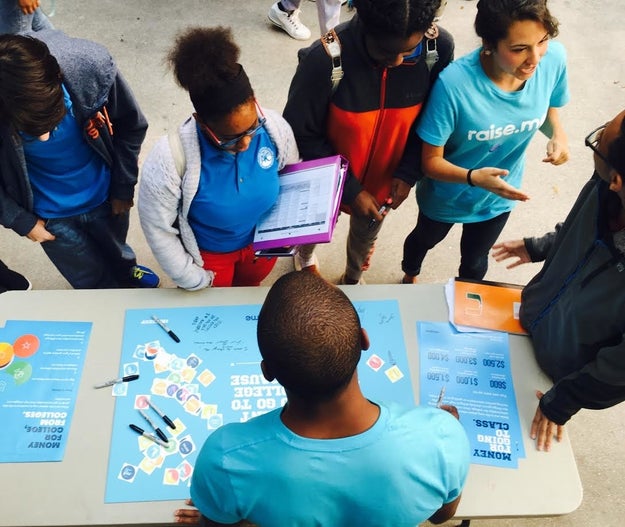
On the website Raise.me, high school students can rack up scholarship money for a laundry list of activities found on almost every college application: good grades, community service, advanced placement classes.

Starting this week, they will also be able to earn hundreds of dollars for taking a job making sandwiches at at Subway or babysitting a younger brother after school. A job running the cash register at a family corner store could be worth as much as $2,000 — similar to the amount that a student would earn for a year&;s worth of straight A&039;s.

Raise.me says it now has almost 400,000 students signed up to use its services, and has made deals with 200 colleges ranging from ASU to Michigan State to Tulane. It generates revenue by charging colleges to use its platform.

With its new “family assistance scholarships,” Raise.me is hoping to enable a growing movement among selective colleges to recognize contributions by low-income students — those who are often shut out of the traditional college admissions horserace because of family obligations and limited opportunities. In addition to focusing on typical extracurricular activities like debate club and service trips, the schools say, they want to reward students who work jobs for pocket money and help their families out at home.

A group of selective colleges joined forces earlier this year to release a report, “Turning the Tide,” that recommended reshaping the admissions process to emphasize “ethical engagement” over personal achievement — rewarding students for helping their families and communities. The idea, in large part, was to recognize the achievements of low-income students and students of color.

Raise.me is hoping to help facilitate that shift. The San Francisco startup allows colleges to offer small, incremental grants — it calls them “microscholarships” — to students for accomplishments like getting A&039;s or leading school clubs. Students can begin to accrue money as high school freshmen, giving them thousands and even tens of thousands of dollars — conditional on their acceptance — before they even apply to a college.

Until now, though, the scholarships had been limited to rewarding students for traditional extracurriculars — those that the “Turning the Tide” report said too often amounted to an attempt to check off boxes, rewarding quantity over quality.

Raise.me scholarships are meant in part to serve as a guidepost, allowing students to see what things colleges value. Schools pick what they want to offer money for: a liberal arts school might encourage a student to take an extra year of a foreign language by offering a $300 scholarship; an engineering school, to pick AP calculus instead of a less rigorous class.

“It can be really intimidating to figure out what you need to do to become better prepared for college,” said Preston Silverman, Raise.me&039;s co-founder and CEO, particularly for students who don&039;t have access to counseling.

Penn State University offers Raise.me to a small group of Pennsylvania public schools — a mix of urban and rural — that have large number of low-income and first-generation students. Jacqueline Edmondson, the school&039;s associate vice president, said they were eager to add the “family assistance” scholarships, hoping both to reward students for non-traditional extracurriculars and to signal to them that Penn State prioritizes their contributions.

“We have students coming from low-income families who might have won money for participating in community service, for example, but they can&039;t afford that time,” Edmonson said. “They weren&039;t just working for themselves, they&039;re working for their families.”

The first class of Raise.me students at Penn State just finished their freshman year, Edmonson said, with higher average GPAs than students from their high schools who came without the scholarship money.

How America’s Top Colleges Plan To Fix The Admissions Process

Quelle: <a href="High Schoolers Can Now Earn Scholarship Money By Caring For Family Members“>BuzzFeed

Meet The 15-Year-Old Behind The Proposed Hijab Emoji

A mockup of a potential hijab emoji.

Aphelandra Messer

Earlier this year, Rayouf Alhumedhi, a 15 year-old student in Berlin, Germany, was trying to start a group chat on WhatsApp with her friends when she realized something important was missing.

Her friends decided to title the group chat by using an emoji that represented each of their faces. Her friends picked their hair and skin colors and created a cartoonish likeness of themselves. For Alhumedhi, who wears a hijab headscarf, this wasn&;t so easy. Though emoji has options for turbans, detective fedoras, police officer caps, and jolly red santa hats, there&039;s no option for the traditional headscarf worn by 550 million Muslim women, alone.

So Alhumedhi took matters into her own hands.

Unsure of what to do, Alhumedhi wrote a long email to Apple&039;s customer help but didn&039;t hear back. A few months later, though, she stumbled on a Mashable explainer about the Unicode Consortium, the technical organization that governs the evolution of emoji and handles new proposals.

Other third-party mobile sticker companies like Bitmoji have added hijabs.

Bitmoji

“I honestly didn’t know what to expect and kind of couldn&039;t believe they&039;d see it or even talk about it — all I wrote was a short paragraph,” Alhumedhi told BuzzFeed News.

But Unicode was intrigued. With the help of an emoji subcommittee member, Alhumedhi was shown how to create a formal emoji proposal and quickly drafted a detailed seven-page document, complete with usage examples and a history of the headscarf in popular society. “The most I’ve written are lab reports at school, so this was really a new experience for me,” she said. “But I had some help and followed the structure of other good proposals.”

An excerpt from the proposal:

* As of 08/26/2016, when typing “hijab” into the tags search bar on Instagram, you will receive 15.6 million photos. On the other hand, searching for “turban” you will receive 732,000 photos.

* Usage of this emoji will be predominantly in Muslim countries. This includes Indonesia, the fourth most populous country in the world, where the Muslim population is 202 million. In Egypt, the 15th most populous country in the world, the percentage of women wearing headscarves is 90%.

The proposal caught the eye of Reddit co-founder Alexis Ohanian, who has sponsored it and is helping Alhumedhi host a Reddit AMA to drum up support for the potential emoji today. There seems to be genuine interest from the outside as well; it already been requested over 100 times on the site EmojiRequest.com.

Alhumedhi plans to submit the proposal to Unicode soon; currently, she’s tweaking the proposal based on feedback she received from emoji subcommittee members. But given the help she’s received from the subcommittee, there’s little doubt it’ll be given very serious attention.

“I feel like it would be a huge achievement,” Alhumedhi told BuzzFeed News of the possibility that her proposal could someday find its way to millions of people’s phones around the world. “550 million woman pride themselves in wearing a headscarf — and it’s not just Muslims but Orthodox Jews and Christians, too. That there could be something to represent them — that this image could be given to people all around the world — it’s amazing and incredible if I could be the person to help do that.”

Quelle: <a href="Meet The 15-Year-Old Behind The Proposed Hijab Emoji“>BuzzFeed