You Can Now Request Self-Driving Ubers In Pittsburgh

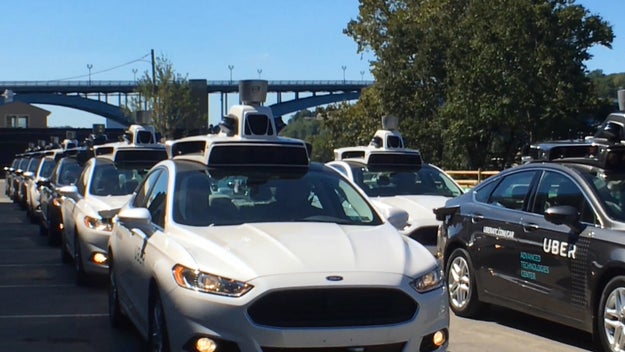
Uber&;s self-driving Ford Fusions in Pittsburgh

Ciara Allen / BuzzFeed News

Pittsburgh, Pennsylvania — once a titan of the steel industry — has a new claim to fame: first city in the United States to let passengers hail rides in self-driving cars.

Beginning Wednesday morning, Uber customers in the former steel town who&039;ve agreed to participate in the company&039;s self-driving car pilot program will have a reasonable chance of being picked up in an autonomous vehicle — albeit one carrying both a safety driver (ready to take the wheel during emergencies) and a co-pilot (to monitor the car and its route on a laptop).

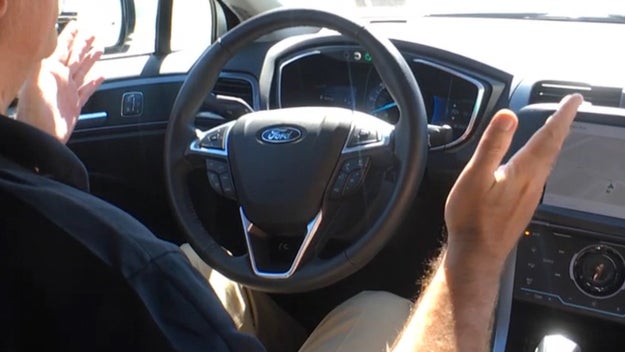
Uber&039;s Pittsburgh pilot program is kicking off with just a handful of self-driving Ford Fusions, but will later expand to include an additional 100 self-driving Volvos. For now, the cars aren&039;t entirely autonomous. A human driver brings the car to the road before hitting the silver button that activates autonomous mode. This safety driver sticks around for the duration of the ride, ready to intervene should something go awry on the journey. Also aboard is a co-pilot in the front passenger seat, watching for glitches and anomalies and sending notes to Uber’s developers, who are refining the algorithms the cars use to navigate.

When automated elevators were first introduced in the 1950s and human operators were no longer needed to man them, the transition was so jarring that some elevator manufacturers added voice narration to reassure people — “Please press the button for the desired floor.” For Uber&039;s driverless car pilot, backup drivers and co-pilots will likely serve a similar purpose — a reassuring presence for people coming to terms with something new and unfamiliar.

Cameras will record the rides of passengers who agree to be part of the pilot program, and Uber says that footage will help improve the experience over time. Riders will receive phone calls asking for feedback on their trips: What did they like? Did anything make them nervous? Were they at all uncomfortable?

“If you think about it, every month, Uber drives over a billion miles,” Anthony Levandowski, who leads Uber’s self-driving efforts, explained. “That data gives us insight into how a city works, where are people driving, where are they getting into accidents, how pickups and drop-offs work.” Levandowski should know. He worked on Google’s self-driving car team before co-founding the self-driving truck startup Otto, which Uber acquired this summer.
Ciara Allen / BuzzFeed News

As fascinated as we might be by the idea of self-driving vehicles, the thought of actually riding in one is sometimes cause for trepidation. Indeed, 3 out of 4 US drivers said they feel “afraid” to ride in a self-driving car, according to an AAA survey of 1,832 US drivers ages 18 and older in January. Only 1 in 5 said they would trust an autonomous vehicle enough to ride in one. That’s more anxiety than the Pew Research Center noted in a 2014 survey, which found that 48% of people would be interested in riding in a driverless car if given the opportunity.

Perhaps with this in mind, Uber has docked an iPad in the back of every Ford Fusion as a sort of informational distraction. It displays the car’s route and also gives riders a sense of what the car itself “sees” — multicolored outlines of other vehicles on the road, and whatever else its sensors are picking up at the time.
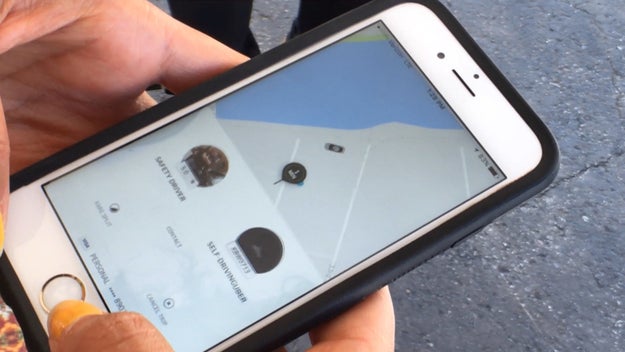
A human driver and a co-pilot will man each self-driving Uber.

Ciara Allen / BuzzFeed News

But why Pittsburgh?

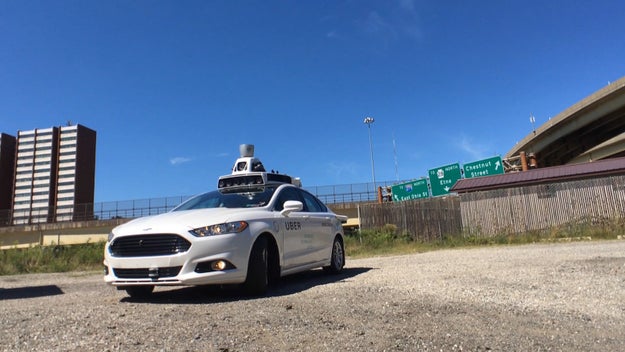
“Pittsburgh is an ideal environment for us,” Raffi Krikorian, director of Uber’s Advanced Technologies Center, told BuzzFeed News. “Pittsburgh is an old city. It has organic road networks. It has a real traffic problem. It experiences extreme weather. We really feel that if we can master driving in Pittsburgh, we can easily master driving in other cities around the world.”

“If we can master driving in Pittsburgh, we can easily master driving in other cities around the world.”

But there are other reasons as well. Pittsburgh is home to Uber’s Advanced Technologies Center, which opened about 18 months ago. The company ravaged nearby Carnegie Mellon University’s robotics unit, poaching about 40 researchers to work on its own driverless car program. And Pittsburgh is an Uber-friendly city. As the city’s mayor, Bill Peduto, recently told the New York Times, “It’s not our role to throw up regulations or limit companies like Uber.”

While Uber is free to send its autonomous cars anywhere in the city, the company will focus on the most popular routes and areas, and ones that mirror traffic patterns in other cities.
Ciara Allen / BuzzFeed News

Bryant Walker Smith, chair of the Planning Task Force for the On-Road Automated Vehicle Standards Committee of the Society of Automotive and Aerospace Engineers, told BuzzFeed News that Uber&039;s self-driving car pilot program in Pittsburgh will give people a more realistic view of the potential and limitations of automated driving.

“The public will play an important role in shaping both social and legal expectations for these vehicles,” Walker Smith said. “That&039;s why companies like Uber should publicly share their safety philosophies — how they define, measure, document, and monitor the reasonable safety of their vehicles now and into the future.”

Self-driving cars have long been expected to upend the transportation industry, and there are a number of companies racing to deliver viable autonomous vehicle solutions. Google has been testing its self-driving cars on the road for years. Ford claims it will mass produce self-driving cars by 2021. Meanwhile, US Department of Transportation Secretary Anthony Foxx is saying we’ll all be riding in self-driving cars within five years — and his agency is the one writing the rules that will govern them. But Uber’s Pittsburgh pilot marks the first larger effort to put people — real people, outside of technologists and media — in self-driving cars in real-world circumstances. And that&039;s a big deal.

Quelle: <a href="You Can Now Request Self-Driving Ubers In Pittsburgh“>BuzzFeed

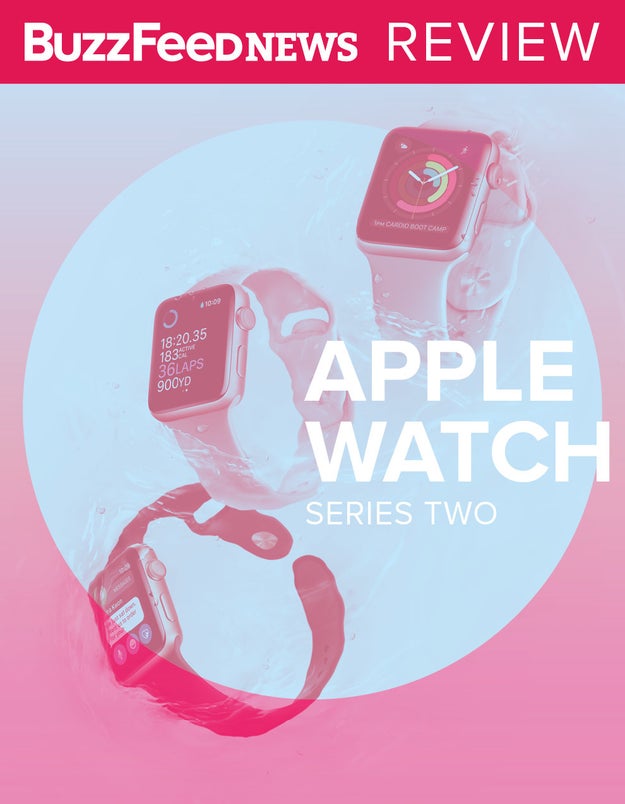
The New Apple Watch Makes Me Not Hate Smartwatches Quite As Much

Swim tracking is where Series 2 shines.

BuzzFeed News / Apple

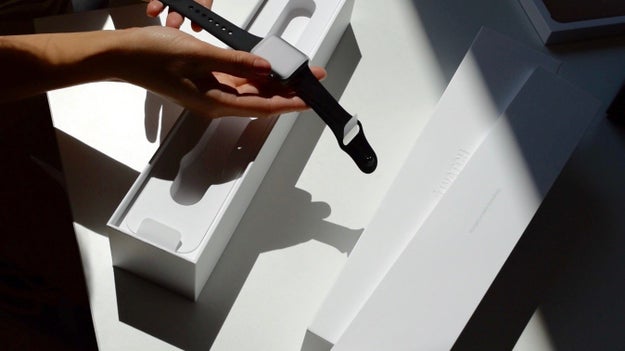
Apple crammed a ton of new health and fitness features to go along with heartrate-tracking and step-counting into its second-generation wearable – including GPS, swim-tracking, built-in meditation, and a collaboration with Nike.

After a week of reviewing the Apple Watch Series 2, I think this $369 mini computer is worth its price for athletes, but maybe not so much for everyone else.

This Apple Watch is… different.

This Apple Watch is... different.

Nothing makes me feel more alone in this world than when I’m mid-conversation with a person looking down at their Apple Watch while nodding to indicate they’re still listening. Presumably they’re just “taking a glance” at their daily step goal progress or a non-urgent text. But a glance can feel like a goddamn eternity when whatever is happening on someone’s wrist is infinitely more interesting than you.

All this to say that I was largely in the camp that smartwatches of any kind – not just Apple Watches – turn the people I love into insufferable assholes. Fitness trackers are uglier and dumber, but are less annoying somehow. It’s not like anyone’s trying to read the news on their Fitbit.

Nicole Nguyen / BuzzFeed News

But this new Apple Watch might have changed my mind about all that.

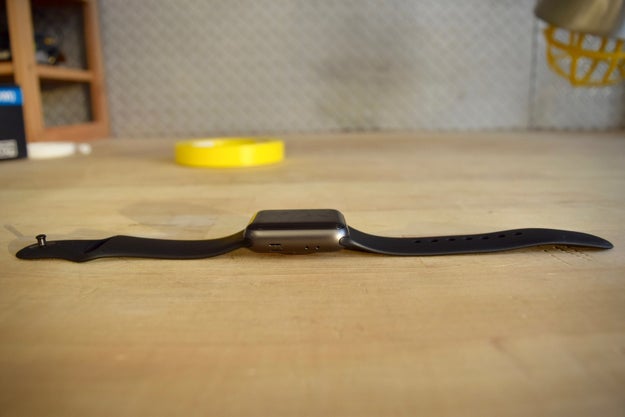
It’s .9mm thicker than the original, but I haven’t noticed it at all – and this time around, my experience was generally more enjoyable. That was thanks to three *crucial* under-the-hood tweaks that made this version feel more useful, and more like an actual watch.

  • “Raise to wake” works much better now (perhaps thanks to a 50% faster processor) so you can actually tell the time when you raise your arm (fancy that) — something that wasn’t always true in the previous version.
  • The screen is brighter so you can actually SEE the time when you’re outside.
  • Finally, it’s water-resistant, so you don’t have to worry about taking this precious little computer off every time you want to take a quick shower or give your dogs a bath.

Plus, Series 2 has more features that stand on their own, and don’t require connecting to your screen jail — I mean, smartphone. I didn’t constantly feel like I needed to pull out the iPhone from my backpack.

Nicole Nguyen / BuzzFeed


View Entire List ›

Quelle: <a href="The New Apple Watch Makes Me Not Hate Smartwatches Quite As Much“>BuzzFeed

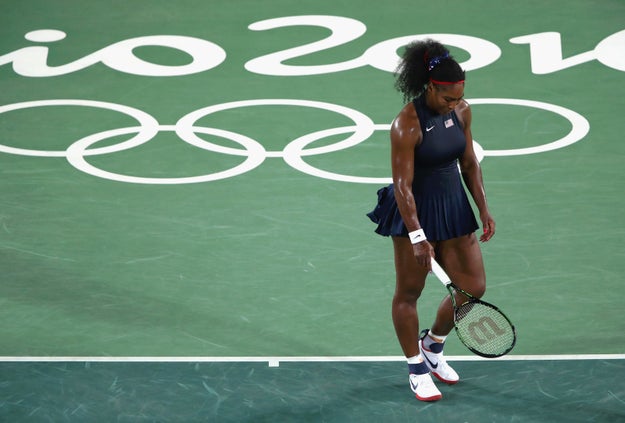
Simone Biles, Serena Williams Among Olympic Athletes To Have Medical Files Hacked

Clive Brunskill / Getty Images

SAN FRANCISCO — The hacked medical files of Olympic athletes Simone Biles, Elena Delle Donne, Serena Williams, and Venus Williams were made public Tuesday by a Russian group that cybersecurity experts say was previously responsible for breaches into the Democratic National Committee and White House.

The World Anti-Doping Agency (WADA) confirmed in a statement posted on Tuesday that its database, which included medical files of athletes competing in the Olympics, was hacked by the Russian group that cybersecurity companies have named “Fancy Bear.”

“WADA deeply regrets this situation and is very conscious of the threat that it represents to athletes whose confidential information has been divulged through this criminal act,” Olivier Niggli, WADA&;s executive director, said in the statement. “WADA condemns these ongoing cyber-attacks that are being carried out in an attempt to undermine WADA and the global anti-doping system.”

Niggli added that law enforcement had determined that the “attacks are originating out of Russia,” without clarifying which agency the body had worked with.

“Let it be known that these criminal acts are greatly compromising the effort by the global anti-doping community to re-establish trust in Russia further to the outcomes of the Agency’s independent McLaren Investigation Report,” Niggli said.

The WADA statement did not mention which cybersecurity company had discovered the breach in their system that accessed the files of the US athletes. WADA did not respond to a BuzzFeed News request for clarification.

The cybersecurity firm ThreatConnect was cited in a previous report that found that the same group of Russian hackers had gained access to the WADA database and gotten into the account of Russian whistleblower, Yuliya Stepanova, an 800-meter runner whose revelations of widespread doping in Russian track and field led to that team being banned from competing in Rio.

Clive Brunskill / Getty Images

ThreatConnect had found that the group — which they call Fancy Bear, but which is also known as Tsar Team and APT 28 by other cybersecurity firms — had hacked into WADA through spear phishing emails. Those emails, which often appear to come from trusted sources and have legitimate information, contain malicious malware which, once opened, gives the attackers access to the system. Cybersecurity experts say that spear phishing is the simplest, most surefire method for hackers to access a computer system.

In a post on the group from August, ThreatConnect said Fancy Bear had called itself Anonymous Poland (@anpoland) when it leaked data stolen from WADA servers on Stepanova. The hackers used the name Anonymous Poland much in the same way that they used the name “Guccifer 2.0” when leaking information during the DNC hack, in both cases blaming known hackers to try and deflect attention from themselves.

“We assess that the phishing and Stepanova&039;s compromise most likely are part of targeted activity by Russian actors in response to the whistleblower and the WADA&039;s recommendation to ban all Russian athletes from the Olympic and Paralympic games in [Brazil],” ThreatConnect said. “Successful operations against these individuals and organizations could facilitate Russian efforts to privately or publicly intimidate them or other whistleblowers.”

ThreatConnect did not respond to a request for comment Tuesday or answer questions on how far the breach of the WADA servers went.

As part of the released records Tuesday, the hacking group said it plans to release more medical files of US athletes. The group wrote that following their review of the medical files, they had found evidence of US athlete doping: “This is other evidence that WADA and IOC&039;s Medical and Scientific Department are corrupt and deceitful.”

U.S. Anti-Doping Agency CEO Travis Tygart has already responded in a statement, saying, “It’s unthinkable that in the Olympic movement, hackers would illegally obtain confidential medical information in an attempt to smear athletes to make it look as if they have done something wrong. The athletes haven’t. In fact, in each of the situations, the athlete has done everything right in adhering to the global rules for obtaining permission to use a needed medication. The respective International Federations, through the proper process, granted the permission and it was recognized by the IOC and USADA. The cyber-bullying of innocent athletes being engaged in by these hackers is cowardly and despicable.”

Quelle: <a href="Simone Biles, Serena Williams Among Olympic Athletes To Have Medical Files Hacked“>BuzzFeed